
How to develop an interior design project?

The beginning of an interior design project is like a blank sheet of paper, and before reaching its conclusion, there are many steps necessary for its construction.
It all starts with the overall plan in which we will arrange the volumes and space. We must take into account the movements and movements of people. Lifestyle habits are therefore very important to consider. How does the client live in their home? Are they energetic and need space between furniture? Do they have children or not? Or are they more serene and need coziness around them?
These questions are fundamental at the beginning and will determine the choice of furniture and style of the project. As an interior designer, it takes a lot of experience to quickly identify the essential needs of clients.
Step by step, the selection of materials becomes clearer and must then be presented to the client so that they can visualize the result. It is difficult to project and visualize, which is why we have to draw. Lighting is very important because it sets the mood, and it will be necessary to make an exact plan of the lights and define their positions even before choosing the materials and furniture. You really have to project yourself into the future interior.
A mood board is also a way to show all the harmonies, plans, and elevations. It gives a very good overall idea.
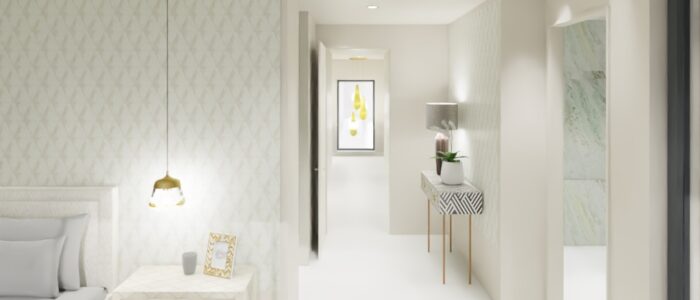
As for the final result shown below, extensive research was done on color harmony and the right choice of furniture. A style is created. Perhaps you should start with an existing piece of furniture or a pattern and build around it. Here, for example, the wallpaper inspired us to have matching bedside tables made. It is therefore necessary to work with skilled craftsmen who are chosen for their reliability and professionalism.

The spaces have been defined, the lighting positioned, and construction has begun. All that remains is to order the materials according to the approved design.

To finish and arrive at this visualization, you understand that long hours of research and work are necessary and, of course, come at a certain cost, which is estimated at the beginning of the discussion with the client. Some people are able to visualize without drawings, but these allow us to be truly certain of a final result without surprises, or at least we try to get as close to it as possible!
Client testimonial:
One client told me that her project was so similar to her visualization that she would have preferred not to have had one and to have been surprised once the project was completed. This was a wonderful show of confidence in our teamwork.
So do you really need to visualize your project?