







Vanina pour la vie
par Suzanne Wathelet
Interview on interior design in the magazine dedicated to the public and private sectors of the Grand Duchy,



How to develop an interior design project?

The beginning of an interior design project is like a blank sheet of paper, and before reaching its conclusion, there are many steps necessary for its construction.
It all starts with the overall plan in which we will arrange the volumes and space. We must take into account the movements and movements of people. Lifestyle habits are therefore very important to consider. How does the client live in their home? Are they energetic and need space between furniture? Do they have children or not? Or are they more serene and need coziness around them?
These questions are fundamental at the beginning and will determine the choice of furniture and style of the project. As an interior designer, it takes a lot of experience to quickly identify the essential needs of clients.
Step by step, the selection of materials becomes clearer and must then be presented to the client so that they can visualize the result. It is difficult to project and visualize, which is why we have to draw. Lighting is very important because it sets the mood, and it will be necessary to make an exact plan of the lights and define their positions even before choosing the materials and furniture. You really have to project yourself into the future interior.
A mood board is also a way to show all the harmonies, plans, and elevations. It gives a very good overall idea.
As for the final result shown below, extensive research was done on color harmony and the right choice of furniture. A style is created. Perhaps you should start with an existing piece of furniture or a pattern and build around it. Here, for example, the wallpaper inspired us to have matching bedside tables made. It is therefore necessary to work with skilled craftsmen who are chosen for their reliability and professionalism.

The spaces have been defined, the lighting positioned, and construction has begun. All that remains is to order the materials according to the approved design.

To finish and arrive at this visualization, you understand that long hours of research and work are necessary and, of course, come at a certain cost, which is estimated at the beginning of the discussion with the client. Some people are able to visualize without drawings, but these allow us to be truly certain of a final result without surprises, or at least we try to get as close to it as possible!
Client testimonial:
One client told me that her project was so similar to her visualization that she would have preferred not to have had one and to have been surprised once the project was completed. This was a wonderful show of confidence in our teamwork.
So do you really need to visualize your project?

While you are discovering this new site, I thought I should introduce myself to you personally and explain my background in a separate article.

I am French, born in Paris where I grew up but I also have Corsican origins, this beautiful island in the Mediterranean where I also lived. I have 3 children and a Scottish husband and I have always managed to reconcile family life and career.
After studying law and art history in Nice, I went to London to perfect my English where I worked in the luxury hotel industry (Intercontinental Hotel) for a few years, before returning to Paris to continue my career in the same hotel chain.
I liked this luxury and very international environment but it did not satisfy my passion for art and design. I therefore decided to change my life and direct it towards this passion by studying interior design at the famous Boule school in Paris.
As an interior designer I started my career in Paris and perfected my training in colour and interior paints with Farrow & Ball. I then started to work as a freelancer with individual decoration projects.
In 2007 I left France and Paris for Germany, quite a challenge! I created my first decoration shop in Trier near the border of Luxembourg, which we call “La grande région”. I learn German and offer my services as an interior designer in my shop and I become a distributor of the Farrow & Ball paint brand that I know very well as well as exclusive wallpapers such as those of ELITIS.
During the following years, I carried out numerous decoration projects mainly for private clients in Germany and Luxembourg. This led me to open a larger interior design shop where I offer services and products. I diversify my product range with design furniture, lighting, more wallpapers, carpets and everything else that allows me to realize complete projects for clients.
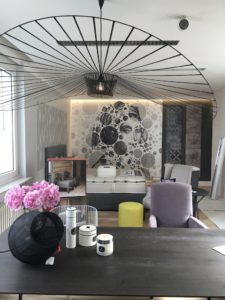
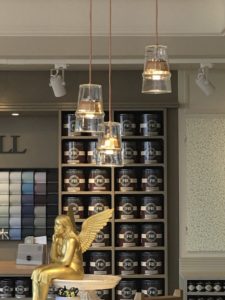
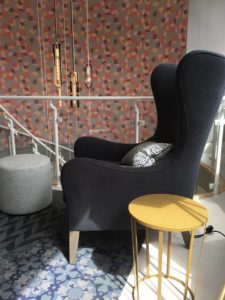
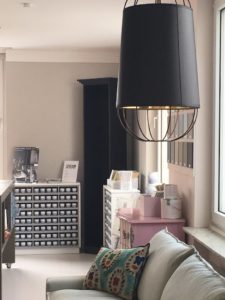
In 2018 a break in my personal life forced me to give up my shop and I designed a new showroom in Nittel D-54453 in Germany still bordering Luxembourg where I advise Farrow & Ball and clients on their projects by introducing them to the many brands and products I work with.
In the same year, as I live in Luxembourg, I decide to create a sister company which allows me to complete the German company. This way I can handle more projects and also distribute more brands, which you can discover in the online shop.
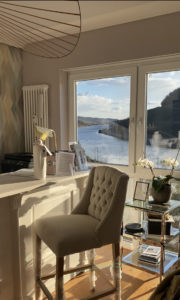
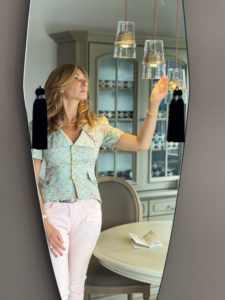
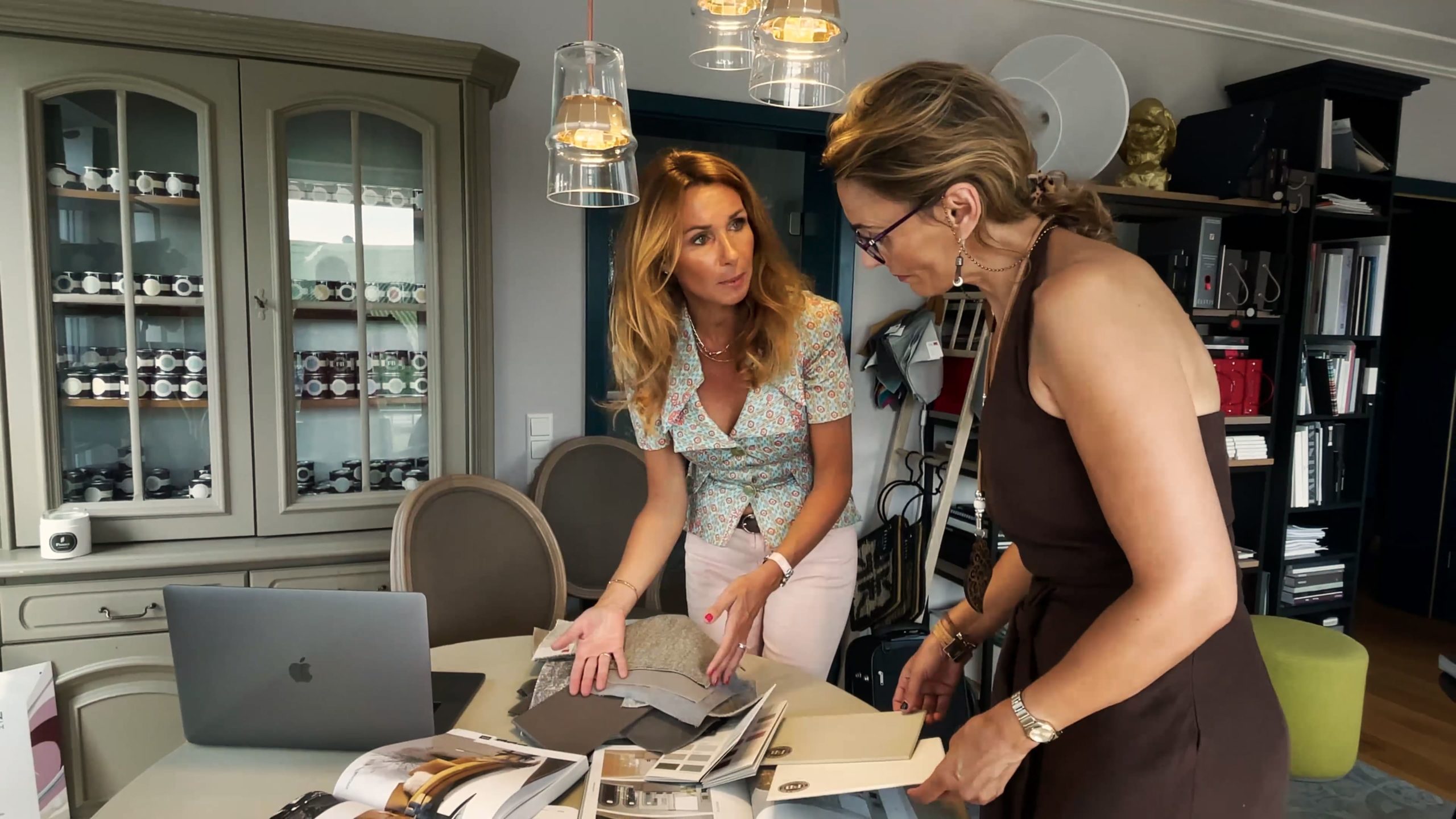
I now work between the two countries and speaking fluent English I adapt my teams to the different nationalities of my clients who live in the heart of Europe and internationally.
My career now takes me to Mallorca, Spain, where I am working on villa projects that are absolutely in line with my ambitions and in an exciting place of culture and especially close to the sea that I miss so much in Luxembourg.
This new website and this shop are in a way a summary of my career as an interior designer and I take you with my team into the world I create, according to my projects and meetings.
I hope you enjoy it!
WHAT DOES SUSTAINABLE CONSUMPTION MEAN?

In a world where production and consumption have become excessive, we are waking up to all the harmful impacts on our planet.
Climate change is palpable, just look at the disastrous summer of 2021 that we had. Floods, fires, hurricanes…with the consequences of death and destruction that cost and annihilate entire families.
Against this we can start to change our consumption habits by asking ourselves the right questions, how to consume, what and how to buy for our home?
That’s why some furniture manufacturers are standing out and making efforts to produce sustainable and very design furniture. They use recycled materials and make furniture that is made to last, thus avoiding over-consumption.
I am absolutely won over by these pieces designed with the right materials such as STEEL which is now the most recycled material in the world.
RECYCLED PLASTIC is also used today to make table tops, shelves, chair backs… and their colours are amazing.
TIPTOE produces furniture-Recycled plastic-Steel
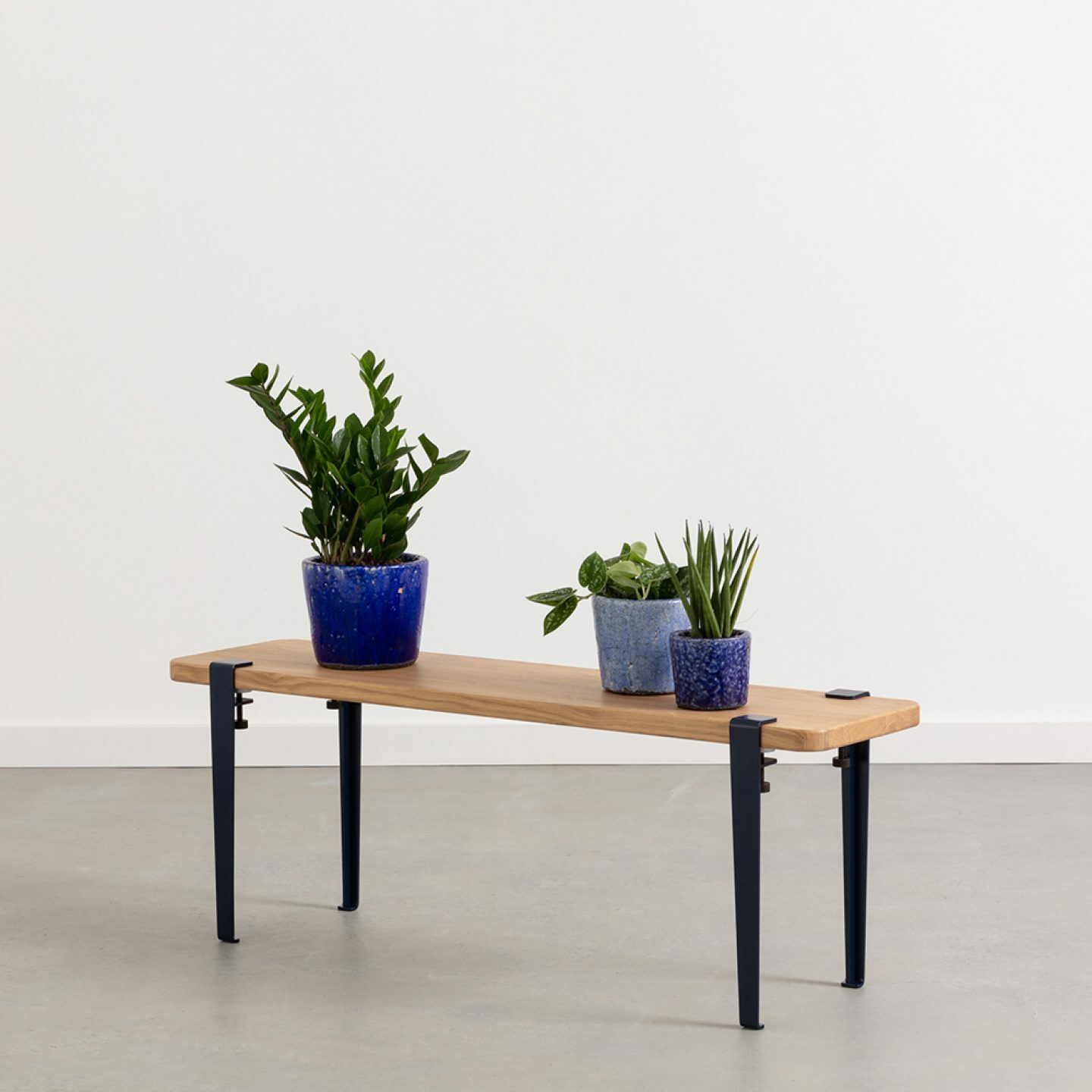
Bench Duke-Tiptoe-Steel and aok
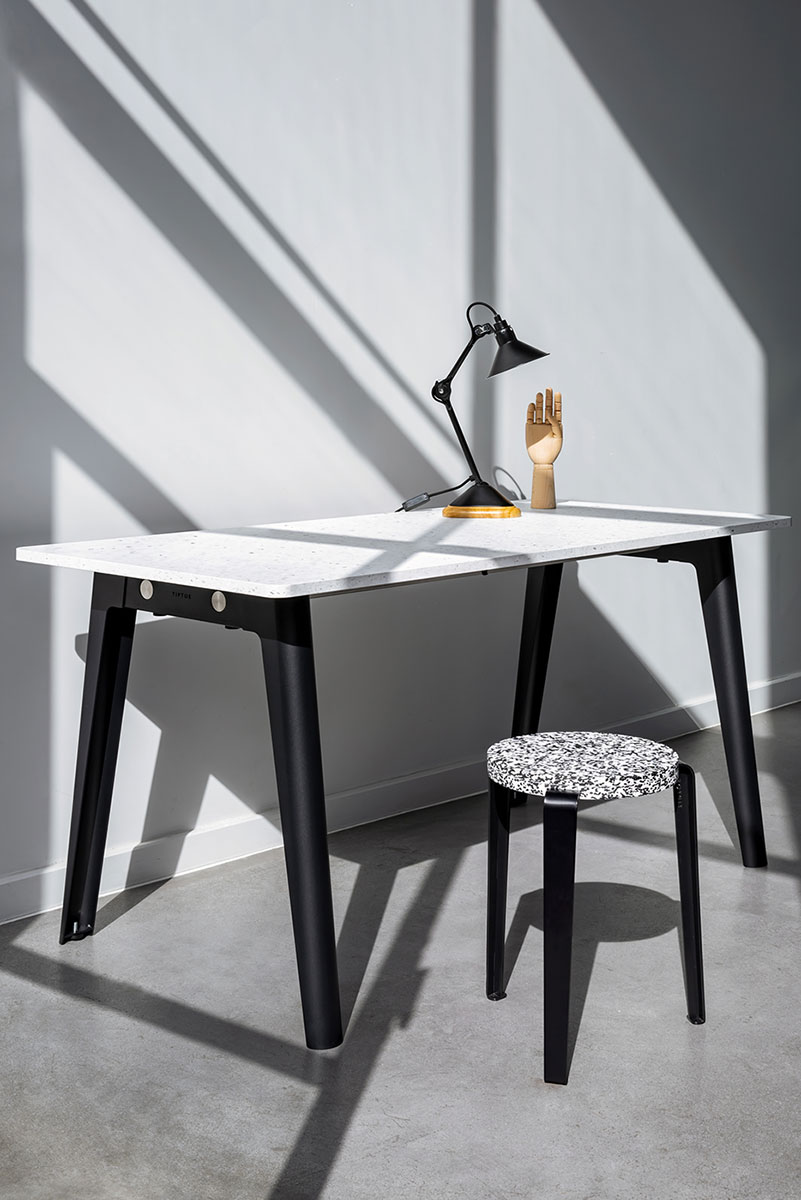
Desk New Modern-Tiptoe-Recycled pastic top & Stool LOU
NOMA produces furniture only from recycled materials, indicating the % of these materials each time.
Choosing a NOMA piece of furniture means choosing a circular economy, the choice of a design furniture while protecting our environment.

Chaise SEN 93,7%

Fauteuil ART 77,5%
NATURAL FIBRES for weaving are also to be favoured, we find them with the linens, the jutes, the straws with which we make pretty rugs or cushions.
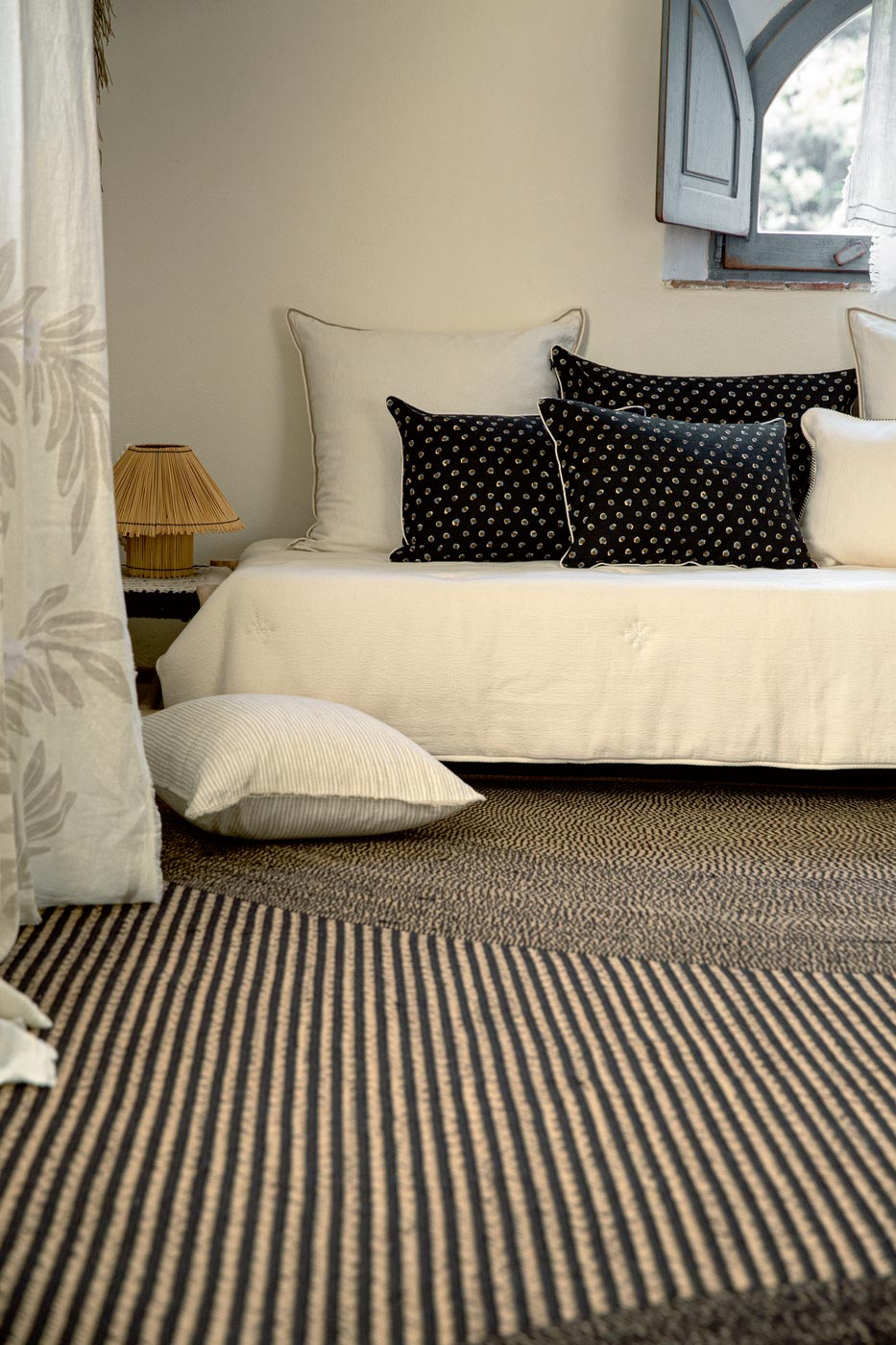
Rugs ELITIS
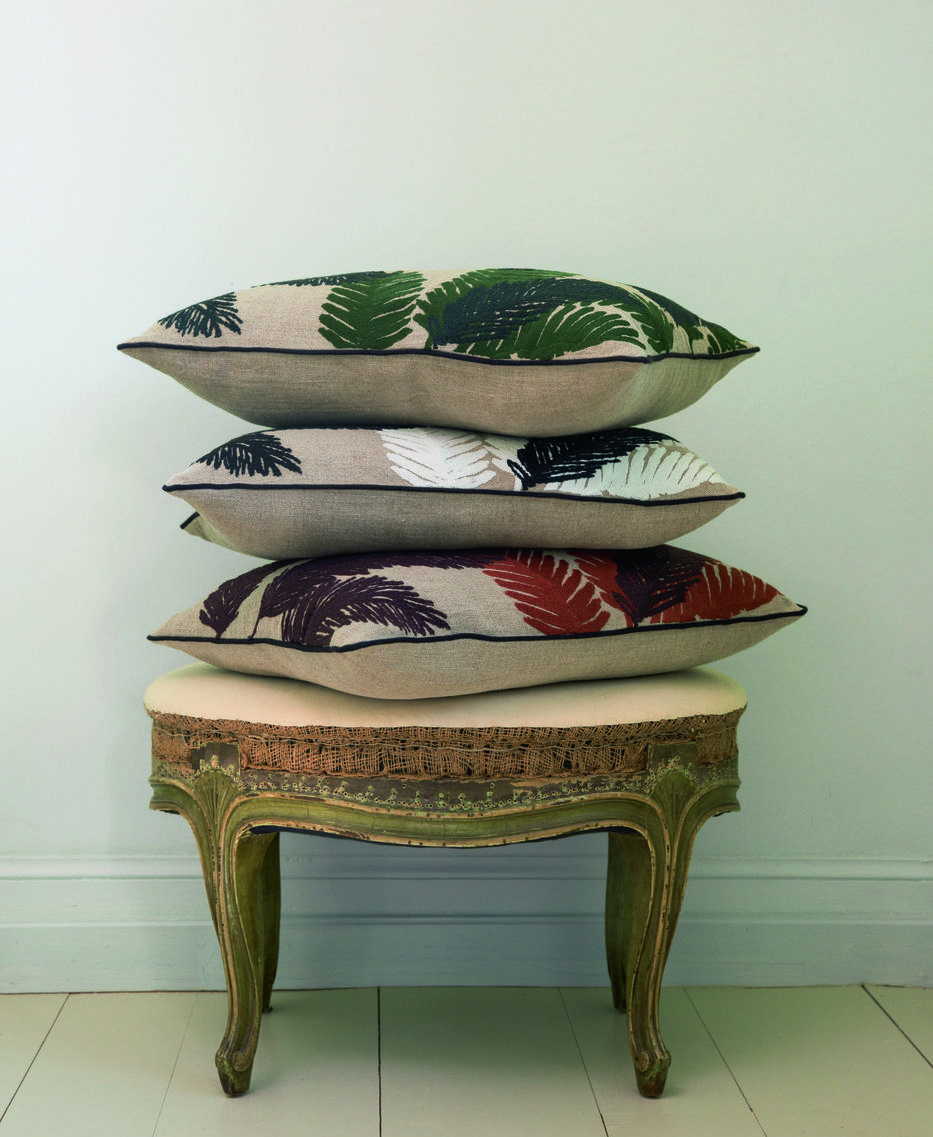
Cushions ELITIS
So take a good look at what you consume, where the product was made and with what materials…?